
Dune Protection: Gardening That Holds the Island Together
Your dune is not landscaping. It's infrastructure — and it's alive.
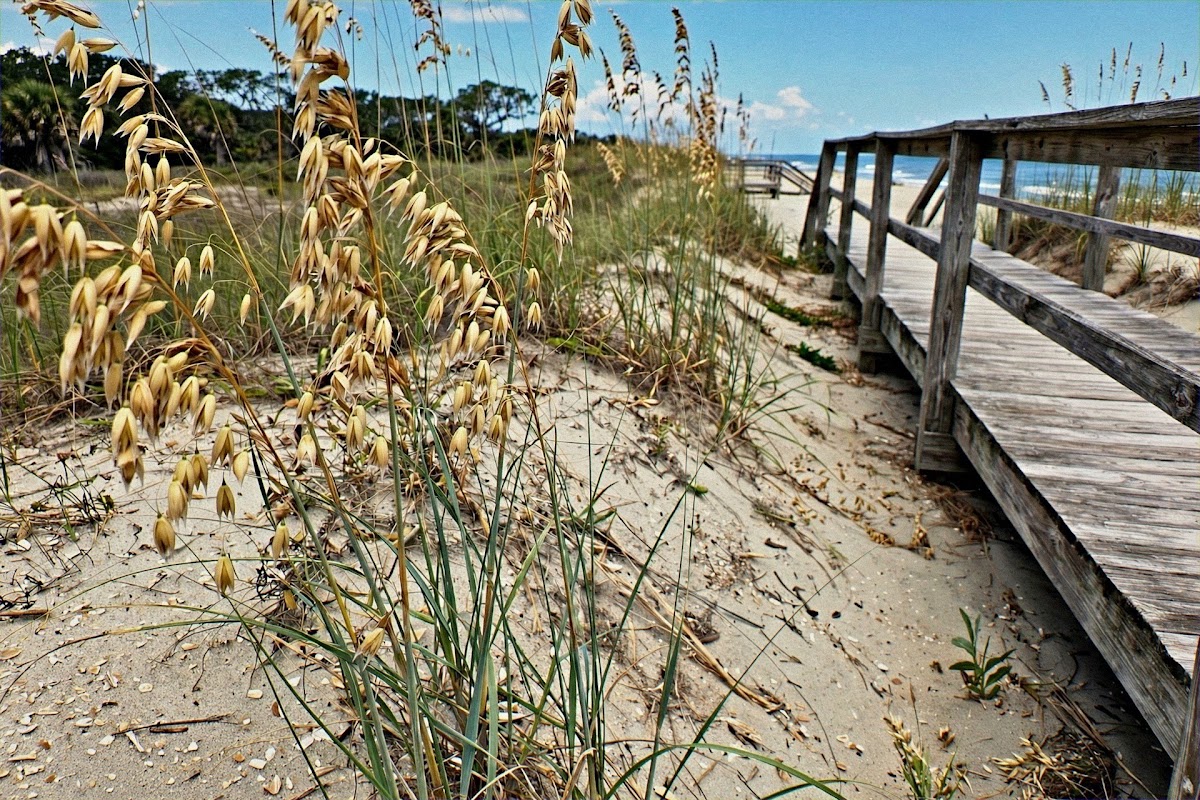
Stand on a Fripp Island beach crossover at sunrise and look down before you look out. That soft, grass-tufted ridge between you and the sand is doing some of the hardest work on the island. Dunes are Fripp's first line of storm defense, a savings account of sand for the beach, and a home for plants and wildlife found almost nowhere else. This is the stewardship piece of our gardening series — less about what to plant for color, and more about how to love the landscape that quietly protects every house, road, and lagoon behind it.
Good dune gardening mostly looks like restraint. That's what makes it beautiful.
How a Dune Actually Works
A dune is not a pile of sand. It's a partnership between sand, wind, and plants.
Wind blows dry sand off the beach until it bumps into something — a clump of grass, a tangle of vine — slows down, and drops its load. The plants grow up through the new sand, trap more, and the dune builds. Below the surface, roots and runners stitch the whole ridge together, so when storm surf chews at the beach, the dune can give up sand to calm the water and then rebuild in the quiet months that follow.
That partnership is fragile in one specific way: feet. Walking on dunes crushes the plants and breaks the root stitching, and wind and water pour through the gaps. That's why the crossovers exist — those wooden walkways aren't just for sandy toes. Every trip over the crossover instead of through the dune grass is a small, real act of island protection. Use them, enjoy them, and let the dunes keep their skin intact.
Meet the Plants Doing the Holding

Sea oats are the signature dune plant of the South Carolina coast — tall, graceful, with oat-like seed heads that nod over the beach all summer. They are also protected under South Carolina law: do not pick them, dig them, or plant them casually on a whim. Dune work can require state coastal permits and FIPOA sign-off — confirm before touching a dune, even to help. Restoration planting is wonderful work when it's coordinated properly, and a headache when it isn't.
Other genuine native dune plants are worth knowing by sight, for admiring now and for approved plantings when restoration is properly organized:
- Beach morning glory and railroad vine: Low, sprawling vines with pink trumpet flowers, running across open sand and stitching it down as they go.
- Seaside goldenrod: A tough fall bloomer that feeds pollinators and tolerates the full salt-and-sand treatment.
- Bitter panicgrass: A sturdy native grass whose deep roots and runners are built for exactly this job.
Notice what these plants share: they want sand, salt, wind, and lean soil. A dune is not a garden bed, and it should never be fertilized, irrigated, or "improved" like one.
Fripp Island Pro-Tip
Fripp Island Pro-Tip: If you want to help the dunes, the most useful tools are patience and the crossover — keep feet, carts, and beach gear off dune vegetation every single trip.
Admire sea oats with your eyes and your camera, never your hands, since they're protected under South Carolina law.
And if a stretch of dune looks damaged, report it rather than replanting it yourself — coordinated restoration lasts, good intentions scattered in sand often don't.
The Invader That Was Planted to Help
Beach vitex is the cautionary tale every oceanfront gardener should know. It was once planted for erosion control — a pretty, purple-flowered groundcover that seemed made for dunes. Instead it became a real invasive problem on South Carolina beaches, smothering dunes under dense mats that crowd out sea oats and native vines, and changing how the dune itself behaves. Avoid beach vitex entirely: never plant it, and don't be fooled if it shows up in an old plant list. The native vines above do the same job while feeding the ecosystem instead of flattening it.
Sand fencing carries a similar lesson. You'll see it along Fripp's beach, placed to slow wind and help dunes build — but its placement is regulated, because a fence in the wrong spot can starve one dune while feeding another. Observe it, walk around it, and don't DIY your own. Dune help runs through coordination, not improvisation.
For Oceanfront Homeowners: A Mindset Shift
If you're lucky enough to live oceanfront, the dune in front of your house asks for a particular kind of pride. Think of it as infrastructure, not a view obstruction to trim.
- Never mow, clear, or thin dune vegetation — not for a view, not for a photo, not for tidiness. The tangle is the point.
- Never rake or level a dune, and keep landscaping crews off it entirely.
- Keep yard work on the house side: fertilizers and garden chemicals near dunes can wash toward the beach and the marsh system the island depends on.
- Before any major landscape change near the beach, confirm with FIPOA / the ARB before major landscape changes — and remember dune work may also need state coastal permission. Asking first is the whole job here.
That same protective instinct covers the dunes' residents. Dunes shelter nesting and resting birds and other wildlife, ghost crabs scuttle through the grass at dusk, and loggerhead sea turtle nests sit in the sand near the dune line in season. Give marked nests a wide, quiet berth, keep lights and noise low nearby, and never disturb a marked nest — watching over them by leaving them alone is a Fripp tradition worth keeping.
The Ridge That Keeps Us
Every islander benefits from dunes they'll never garden, and that's exactly the point. This one long, grassy ridge absorbs the storm, banks the sand, shelters the wildlife, and asks almost nothing in return — just our feet on the crossovers, our hands off the sea oats, and our respect for the plants holding it all together.
Next sunrise walk, pause on the crossover a moment longer. Watch the sea oats nod, the railroad vine bloom down in the sand, and the ghost crabs get to work. That's not scenery, friend. That's Fripp Island, holding itself together — with a little help from all of us.
LIVE THE LIFE!

Get a FREE Fripp Life sticker!
Enter your email to claim your sticker and sign up for island news, events, and discounts.