
The Fripp Island Story
Pirates, planters, a buried-treasure legend, and one bold bridge — how a boat-only hunting island became Fripp, and why its past explains its laid-back pace.
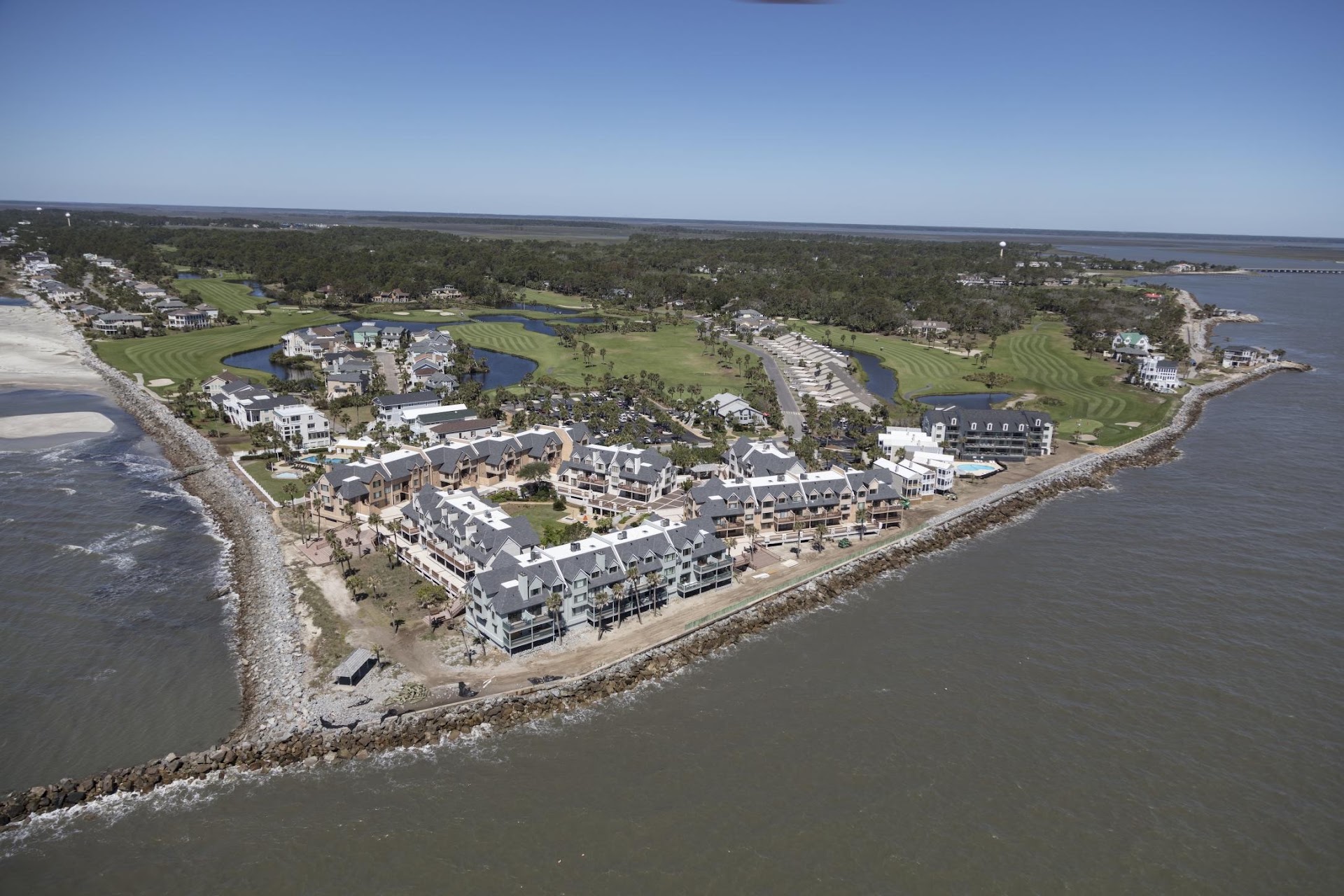
Stand at the Fripp gate for a minute and take stock of what Fripp Island is today: about 3,000 acres at the very edge of the map — the most seaward of all South Carolina's Sea Islands, so far out that due east of its beach, the next landfall is Bermuda, some 900 miles away. It's private and gated, a designated wildlife sanctuary, three miles of beach, fewer than a thousand year-round neighbors, and a deer population that has the right of way and knows it.
It feels permanent, like it was always exactly this. It was not. For most of its recorded life, Fripp was a place almost nobody could get to — an island you reached by boat, owned by people who mostly lived somewhere else, and visited mainly by hunters, fishermen, and (if the stories are true) pirates. The Fripp you love is barely sixty years old. The island underneath it is much, much older. This is its story.
A Pirate, a Deed, and a Really Good Story
Start with the name, because the name comes with the best story on the island. By the account you'll hear most often, Fripp Island takes its name from Captain Johannes Fripp, a British sailor and privateer — think pirate, but with paperwork — charged with protecting the young Carolina colony from Spanish attacks in the late 1600s. In the full telling, Fripp defended the Beaufort area so well that a grateful King Charles deeded him this island as a reward. The captain settled here, married a woman named Martha Scott, and raised a family that grew into Beaufort-area planting aristocracy.
And then there's the other pirate. Local folklore has long suspected Fripp of being a place where Edward Teach — Blackbeard himself — stashed some of his treasure. Pirates certainly worked these waters, the inlets here are a smuggler's dream, and the buried-treasure stories have never really gone away. Every so often, somebody still takes a metal detector down the beach at low tide, just in case.
Now the honest footnote, because Fripp Life keeps it straight with you: historians will tell you the documentation for the captain's tale is thinner than the legend. What's solid in the record is that the island wore a string of names over the centuries — Reynolds Island, Prentiss Island among them, usually after whoever owned it at the time — and that the Fripp name runs through one of the great St. Helena planting families of the era. (Fripp descendants and namesakes still live around Beaufort today.) The truth is probably some braided version of both. Either way, the island wears its legend well. A place this pretty deserves a pirate.
The Planters' Hideaway
From the 1700s onward, Fripp belonged to a rotation of St. Helena Island plantation families — and here's the part that explains everything that came after: they mostly didn't live here, and they mostly didn't farm here. They used Fripp as a hunting retreat.
That mattered. Next door on St. Helena, Sea Island cotton — the long, silky, ruinously profitable kind — built some of the great fortunes of the antebellum South. Fripp, smaller and more exposed, was where the planter class went to play: deer in the maritime forest, ducks in the marsh, fish in the creeks, and nobody around to bother them. No grand plantation seat rose here. No town. Just an island kept semi-wild on purpose, as a rich man's sporting ground.
Call it the island's first draft: Fripp as an escape, never an enterprise. Three hundred years later, that is still — not coincidentally — exactly what it is.
The War Arrives: November 1861
Fripp's quiet might have lasted forever if the Sea Islands hadn't been sitting on one of the finest deep-water harbors on the Atlantic coast. On November 7, 1861 — seven months into the Civil War — a Union naval armada sailed into Port Royal Sound, right off Fripp's shores, and overwhelmed the Confederate forts guarding it. It was one of the first great Union victories of the war, and it changed this coast overnight.
Beaufort District's planters fled inland so fast they left nearly ten thousand enslaved people behind on the island plantations. The Sea Islands — Fripp among them — stayed in Union hands for the entire rest of the war, one of the only corners of the Confederacy held that long. What happened next made history of a different kind: the Port Royal Experiment, in which freedpeople went to work for wages, attended new schools, and began building free lives years before emancipation reached the rest of the South. In 1862, the Penn School opened on St. Helena, a short boat ride from Fripp's beach — one of the first schools in the South for formerly enslaved people, and still standing today.
No famous battle carries Fripp's name; the island's war was the region's war, watched from a beach that suddenly sat behind Union lines. But when the fighting ended, the old planter world that had used Fripp as its playground was gone — and the island simply went quiet again, back to hunters, fishermen, and the boat ride over.
The Long Quiet
Here's a statistic that tells you most of Fripp's history: for most of the time Europeans have known this island existed, its main land use was a private hunting range. Through the late 1800s and the first half of the 1900s, while Beaufort grew and Hilton Head was still decades from fame, Fripp stayed a boat-only outpost — hunting parties in season, a caretaker's eye the rest of the year, deer and hogs and birds holding the deed the rest of the time.
That long quiet is the luckiest thing that ever happened to this island. Development pressure can't touch a place you can't drive to. While other barrier islands were being roaded, subdivided, and sold off lot by lot in the postwar boom, Fripp sat untouched — its forest thick, its marshes intact, its beach empty — waiting for somebody to make one very bold decision.
1961: Somebody Bets on a Bridge
The decision came in 1961, when investors set out to do something audacious: build a residential resort community on an island with no bridge, no public water, and no road within swimming distance. (Islanders will argue the bridge year over coffee — plenty of sources say 1961, when the project launched; the Fripp Island Public Service District's own history dates the finished bridge to 1964. The short version: in the early sixties, the gamble was made, and then it was built.)
The machinery was as bold as the idea. Bonds were secured and a public service district established to run the island's services — the same Fripp Island Public Service District that still minds the water, fire protection, and the bridge today. Island services started from scratch and stayed charmingly small for years: the first fire department was a volunteer crew whose truck lived in a three-sided shed. And the bridge itself: the Fripp Inlet Bridge, 2,067 feet of it, completed in 1964, hopscotching from Fripp to Hunting Island and on toward Highway 21 and Beaufort. The legislation authorizing it set a two-dollar toll — imagine paying for the privilege and being thrilled about it — though it's toll-free now. By 1965, St. Helena was pumping drinking water over to the island's tank. Fripp was officially reachable.
What followed happened fast. Within a decade the developers had raised the Ocean Point Golf Links — George Cobb's design, open by the early 1970s — a racquet club, a marina, and the first generation of homes and condos, laid out with a light touch that set the pattern for the next thirty years. Beaufort's own Pat Conroy discovered the pre-bridge island as a teenager on a fishing trip and never really got over it; he lived on Fripp for years and later turned it into the "Isle of Orion" in his novel Beach Music. Hollywood found it too — the Vietnam scenes in Forrest Gump were filmed right here on the island. The secret was out, but gently.

The Island Today — and Why It Feels Like This
The last big chapter came in 1994, when the island's final major development phase filled in its southwestern end: the Ocean Creek Golf Course, designed by Davis Love III, a new amenities center, and an expanded marina. The modern Fripp Island Resort took its shape around the turn of the century, and then — this is the crucial part — development stopped, on purpose. There will be no future expansion; nearly a third of the lots on the island remain undeveloped to this day. Today there are roughly 1,474 homes and villas, a year-round population just under a thousand that swells to about five thousand in summer — and somehow it still feels empty at the beach on a Tuesday. The golf cart long ago became the island's official vehicle, which tells you most of what you need to know about the pace the place settled into.
And the wildlife-first character isn't marketing. The island is a designated wildlife sanctuary, home to more than 175 species of birds; the whole island is an Audubon-designated bird preserve, watched over by an Audubon club residents founded back in 1978; loggerhead turtles nest on the beach each summer under the protection of a resident turtle patrol; and dolphins strand-feed in the creeks — a hunting behavior you can see almost nowhere else on Earth. We gave the deer their own feature, because of course we did — they're the island's other founding family.
So why does Fripp feel the way it does? Its history is the answer. It's private because for three centuries it was remote — privacy is its oldest habit. It's unhurried because the bridge came late and reluctantly, and the island never did catch up to mainland pace, thank goodness. And it's wildlife-first because for most of its existence, wildlife was most of what was here. The developers who finally arrived in the sixties had the good sense — and, frankly, the good luck — to build around that instead of over it.

You're In the Story Now
Every islander and every returning guest adds a small chapter: the first cart ride, the deer in the headlights of the porch light, the sunset that got photographed four hundred times and still didn't do it justice.
Fripp spent three hundred years being hard to reach. You made it. Welcome to the island. 🌴
Next in the story
This is the whole story in one read — and now we're telling it properly, one chapter at a time. Start with the island before the bridge, before the name even settled: three hundred years of wild, beautiful waiting.
Chapter 1: The Island That Waited →LIVE THE LIFE!

Get a FREE Fripp Life sticker!
Enter your email to claim your sticker and sign up for island news, events, and discounts.