
Shade Gardening Under the Maritime Forest Canopy
Cooler porches, lower water bills, and a garden that loves the oaks as much as you do

Drive into mid-island Fripp and the temperature drops a few degrees — you can feel it. Live oaks arch over the streets, pines and palmettos fill in between, and whole yards live in soft, green, dappled light. Newcomers sometimes look at that shade like a problem to solve. Longtime islanders know better. That maritime forest canopy is the reason your porch is pleasant in August, your water bill stays sane, and your yard doesn't bake by noon. The trick is simple: plant for the shade you have instead of fighting for the sunny lawn you don't. Do that, and shade stops being a limitation. It becomes the best room in the house — the outdoor one.
The Real Challenge: Dry Shade and Hungry Roots
Here's the honest part, neighbor to neighbor. Shade itself isn't hard. Dry shade is. A mature live oak is a magnificent drinking machine, and its roots will out-compete almost anything you plant beneath it for water and nutrients. Add Fripp's sandy soil — which drains fast and holds very little — and you've got the toughest combo in coastal gardening: shade that is also thirsty.
That doesn't mean you give up. It means you choose plants built for it, water new plantings faithfully while they establish, and mulch like you mean it. A three- to four-inch layer of pine straw or shredded bark slows evaporation, keeps roots cooler, and buys your plants time between waterings. And please, let the grass go under the oaks. Turf in deep shade over oak roots loses that fight every single year, and it looks tired trying. A generous mulch ring with shade plants tucked into it looks intentional, lush, and Fripp — because it is.
One more root rule: never girdle, trench, or cut casually through major oak roots to install a bed or a path. Those roots are the tree's lifeline and its anchor in a storm. Work around them, plant between them, and let the tree keep doing its job.
Plants That Actually Love It Here
Start with the bulletproof bench, the plants that shrug at dry shade in Zone 9a/9b:
- Cast iron plant — The name is earned. Slow-growing, evergreen, and nearly indifferent to neglect, dry soil, and deep shade. Plant it once and enjoy it for decades.
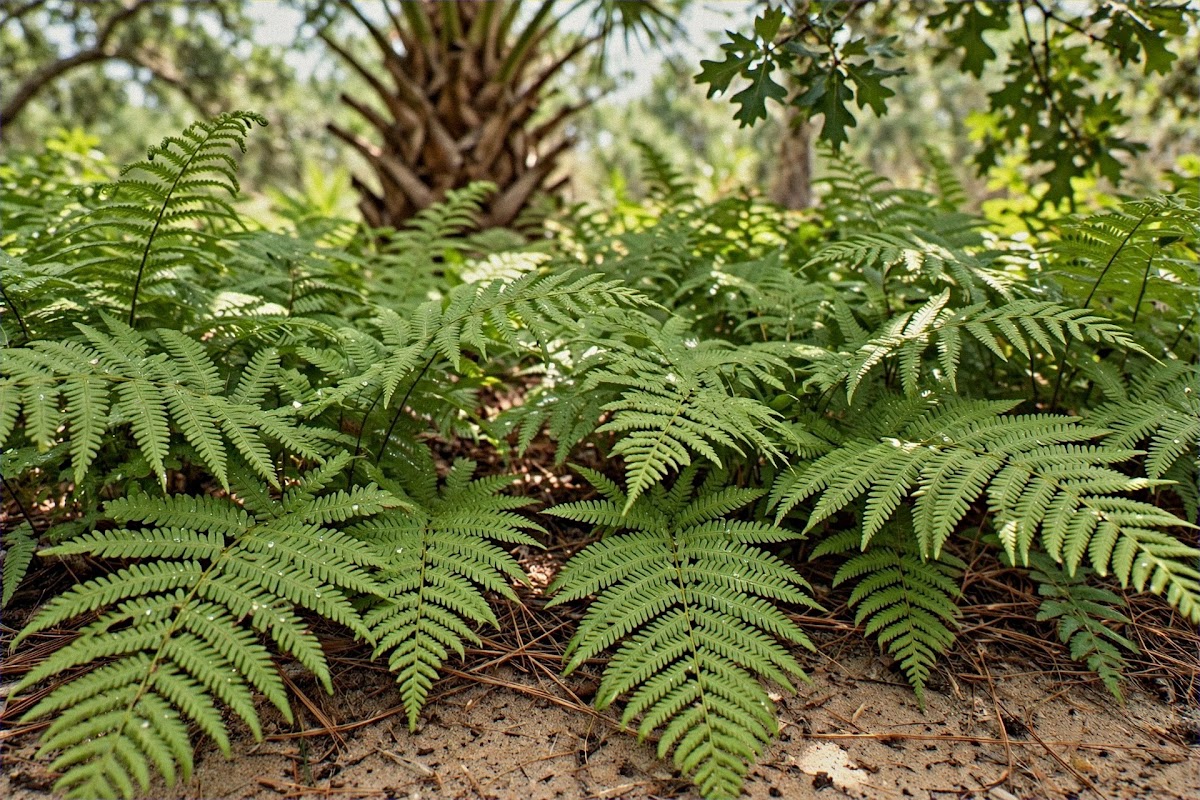
- Autumn fern and southern shield fern — Lacy, dependable texture. Autumn fern flushes coppery new fronds that look like fall arrived early, in the best way.
- Holly fern — Bold, glossy, and tougher than it looks, with a tidy clumping habit that reads well along a path.
- Japanese painted fern — Silver and burgundy fronds that genuinely glow in shade. One hedge: it typically dies back in winter here and returns in spring, so don't panic in January.
- Coontie — A Florida-and-coastal native cycad with feathery, palm-like foliage. Tough, slow, and right at home under pines.
- Needle palm and inkberry — Needle palm is one of the hardiest palms you can plant and handles shade gracefully. Inkberry, a native holly, gives you evergreen structure without fuss.
- Caladiums — Planted as warm-season bulbs or annuals, they deliver the color shade gardens supposedly can't have — pink, red, and white leaves all summer long.
Layer in a few character plants, too. Aucuba, the gold dust plant, lights up dark corners with yellow-speckled evergreen leaves. Mahonia 'Soft Caress' offers fine, bamboo-like foliage without a single thorn — a mahonia you can actually hug, if you're so inclined. Farfugium, the tractor seat plant, brings big, round, glossy leaves; just know it can be slug-prone in damp spots, so site it where air moves and check it now and then.
The Classic Understory, With Honest Fine Print
No Fripp shade garden conversation is complete without camellias and azaleas, and for good reason. They evolved for exactly this job — flowering shrubs beneath tall trees — and a camellia blooming in January under bare oak branches is one of the island's great winter pleasures. Give them partial shade, acidic amended soil, and steady moisture while young, and they'll reward you for years.
Now the fine print, because Fripp Life keeps it honest: deer browse both camellias and azaleas, and they have a special fondness for the buds — which is to say, next month's flowers. They are deer-resistant in the loosest sense only; remember, deer-resistant is never deer-proof, especially on an island where deer graze yards like residents. Protect young plants with netting or cages until they're established and large enough to spare a few bites, and site your favorites where you can keep an eye on them.
Impatiens deserve a mention and a caution. Old-fashioned impatiens have struggled with downy mildew disease in recent years, so if you want that classic pop of color, New Guinea types are generally the safer bet — and even then, good air circulation helps.
Making Shade Feel Bright
Shade gardens don't have to feel dark. A few neighborly tricks help. Pale gravel or fresh pine straw against deep green foliage creates contrast that reads as light. White-flowering plants — white caladiums count, too — practically glow at dusk under the canopy, which is exactly when you're out on the porch enjoying it. Glossy leaves help as well; holly fern and farfugium catch and bounce what light there is. Skip garden mirrors, by the way — they're a hazard for birds, and Fripp's birds have enough to navigate.
Think in layers, the way the forest does: low ferns and cast iron plant at the front, inkberry and mahonia in the middle, camellias holding the back. That's not just pretty. It's how a planted understory protects soil, slows runoff toward our lagoons, and keeps the maritime forest feeling like a forest.
Fripp Island Pro-Tip
Before you remove or heavily limb a major oak to "get more light," pause. Confirm with FIPOA / the ARB before major landscape changes like tree removal — and try planting for shade first. Most folks who do end up glad they kept the canopy, the cool, and the tree.
Embrace the Green Shade
A sunny yard is lovely, but a Fripp shade garden is something better: cool, calm, water-wise, and deeply Lowcountry. Work with the oaks instead of against them, pick plants that genuinely want dry shade, protect the young camellias from ambitious deer, and mulch with a generous hand. Then pour something cold, settle onto that cooler porch, and enjoy the garden that the maritime forest was offering you all along.
LIVE THE LIFE!

Get a FREE Fripp Life sticker!
Enter your email to claim your sticker and sign up for island news, events, and discounts.